Disasters are becoming more frequent and complex due to climate change, urbanization, and global population growth. From floods and earthquakes to wildfires and pandemics, emergency situations require well-trained teams capable of responding quickly and effectively. This raises an important question: how can we empower the disaster management crew to handle crises more efficiently and save more lives?
Disaster response teams play a crucial role in protecting communities, delivering humanitarian aid, and coordinating rescue operations. Strengthening their capabilities requires improved training, advanced technology, coordinated leadership, and strong institutional support. Organizations such as the United Nations and the United Nations Office for Disaster Risk Reduction emphasize the importance of empowering disaster management professionals to build resilient societies.
In this guide, we explore practical strategies, systems, and initiatives that can empower disaster management crews and strengthen global emergency response systems.
Understanding Disaster Management and Its Importance
Disaster management is the coordinated process of preparing for, responding to, and recovering from emergencies caused by natural or human-made hazards. It includes several critical components such as disaster preparedness, emergency response, and long-term recovery.
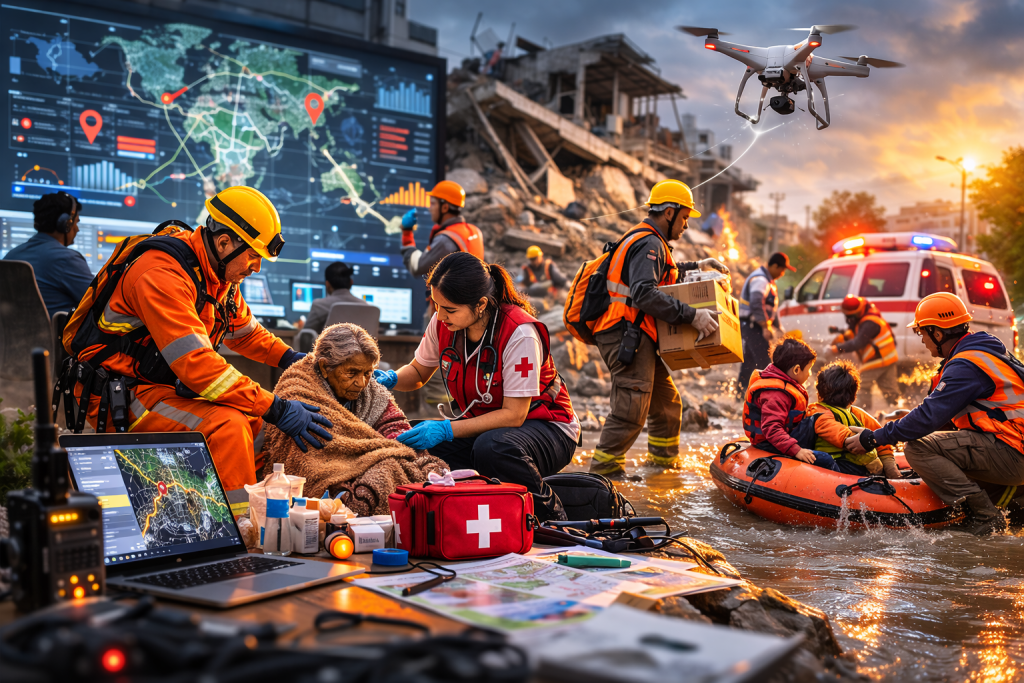
Organizations such as the International Federation of Red Cross and Red Crescent Societies and the Red Cross have long supported disaster relief operations by training volunteers, coordinating humanitarian logistics, and delivering essential supplies during crises.
Effective disaster management requires collaboration among public safety agencies, governments, and humanitarian organizations. Empowering disaster crews ensures that these systems function efficiently during emergencies.
The Role of Disaster Response Teams
Disaster response teams are the first line of defense during emergencies. These professionals and volunteers are responsible for search and rescue operations, emergency medical services, evacuation management, and disaster communication systems.
For example, agencies such as the Federal Emergency Management Agency and the National Disaster Management Authority coordinate emergency operations centers and disaster response teams to manage large-scale emergencies.
Their responsibilities include:
- conducting rescue operations
- providing emergency medical care
- coordinating humanitarian aid
- managing emergency shelters
- ensuring public safety
Empowering these teams means providing them with the tools, knowledge, and support necessary to perform these tasks effectively.
1. Strengthening Disaster Preparedness Training
One of the most effective ways to empower disaster management crews is through comprehensive training programs. Disaster preparedness training ensures that responders can react quickly and make informed decisions during emergencies.
Training programs should include:
- emergency preparedness training
- disaster simulation exercises
- search and rescue training
- crisis management leadership skills
- disaster communication strategies
Organizations like the World Health Organization often support training initiatives that prepare emergency medical services teams to respond to health emergencies and disaster-related injuries.
Regular simulation exercises allow teams to practice real-world scenarios, improving their readiness for floods, earthquakes, and wildfire responses.
2. Building Strong Emergency Management Systems
Empowering disaster crews requires well-organized emergency management systems that support coordination between multiple agencies.
Modern disaster management relies on systems such as:
- incident command systems
- emergency operations centers
- disaster communication networks
- coordination platforms for rescue teams
An effective incident command system ensures that each response team understands its responsibilities and communicates efficiently during emergencies.
Strong coordination helps avoid confusion and allows response teams to work together effectively during large-scale disasters.
3. Investing in Advanced Rescue Technology
Technology plays a critical role in modern disaster management. Empowering disaster crews with advanced tools improves rescue efficiency and safety.
Important technologies include:
- rescue drones for search operations
- satellite communication systems
- early warning systems for disasters
- geographic information systems for risk assessment
- advanced rescue equipment
These technologies allow disaster response teams to locate victims faster and manage emergency logistics more efficiently.
For example, early warning systems can alert communities about approaching floods or storms, allowing disaster crews to prepare evacuation plans in advance.
4. Improving Disaster Communication Systems
Effective communication is essential during emergency situations. Without reliable communication systems, disaster response teams cannot coordinate rescue operations or distribute resources effectively.
Improving disaster communication involves:
- real-time communication networks
- emergency alert systems
- mobile communication technology
- crisis communication strategies
Reliable communication helps ensure that first responders, emergency shelters, and humanitarian logistics teams remain connected during disasters.
Clear communication also improves coordination with public safety agencies and volunteer groups.
5. Strengthening Volunteer Coordination
Volunteers play a crucial role in disaster relief operations. Many humanitarian organizations rely heavily on volunteers to support rescue operations and provide community assistance.
Empowering disaster management crews involves improving volunteer coordination systems through:
- volunteer disaster response training
- clear leadership structures
- digital volunteer management platforms
- community engagement programs
Well-trained volunteers can support professional response teams by distributing aid, assisting in evacuation efforts, and helping with recovery operations.
6. Enhancing Disaster Risk Reduction Strategies
Disaster management is not only about responding to emergencies—it is also about preventing them. Disaster risk reduction strategies help minimize the impact of disasters before they occur.
These strategies include:
- risk assessment and hazard mapping
- disaster mitigation planning
- infrastructure resilience programs
- climate change adaptation strategies
Organizations like the United Nations Office for Disaster Risk Reduction promote global initiatives aimed at reducing disaster risks and strengthening community resilience.
By addressing risks proactively, disaster management crews can focus more on prevention and preparedness.
7. Supporting Disaster Crew Mental Health and Well-Being
Disaster response teams often work in stressful and emotionally challenging environments. Empowering these teams requires providing strong psychological support systems.
Key initiatives include:
- mental health counseling for responders
- stress management programs
- peer support networks
- rest and recovery schedules
Supporting the well-being of disaster crews ensures they remain effective and resilient during long-term emergency operations.
8. Strengthening Emergency Logistics and Resource Management
Efficient logistics systems are essential for successful disaster relief operations. Disaster crews must have access to critical supplies such as food, medical equipment, and rescue tools.
Improving emergency logistics involves:
- supply chain coordination
- rapid deployment systems
- humanitarian logistics planning
- resource allocation strategies
Strong logistics systems help ensure that aid reaches affected communities quickly and efficiently.
9. Developing Community Resilience Programs
Empowering disaster management crews also involves strengthening the communities they serve. Communities that are well prepared for disasters can respond more effectively and recover faster.
Community resilience programs include:
- disaster awareness programs
- community emergency response training
- evacuation planning initiatives
- disaster preparedness workshops
Educating communities reduces the burden on emergency responders and improves overall disaster response effectiveness.
10. Encouraging International Collaboration
Disasters often cross national borders, requiring international cooperation and coordinated humanitarian response.
Global organizations such as the United Nations and the International Federation of Red Cross and Red Crescent Societies facilitate collaboration between countries and humanitarian groups.
International collaboration supports disaster crews through:
- shared disaster response resources
- joint training programs
- knowledge exchange initiatives
- coordinated humanitarian aid efforts
This cooperation strengthens global disaster resilience and improves emergency response capacity.
The Growing Impact of Climate Change on Disaster Management
Climate change has increased the frequency and intensity of natural disasters such as floods, wildfires, and hurricanes. As a result, disaster management crews must adapt to new challenges.
Preparing for climate-related disasters involves:
- improving flood response systems
- strengthening wildfire response teams
- enhancing early warning systems
- expanding disaster mitigation strategies
Empowering disaster crews with modern tools and knowledge helps them respond effectively to these emerging threats.
The Future of Disaster Management Workforce Development
The future of disaster management depends on continued investment in training, technology, and leadership development.
Key trends shaping the future include:
- AI-powered disaster prediction systems
- advanced rescue robotics
- smart emergency communication platforms
- integrated global emergency response networks
These innovations will help disaster response teams operate more efficiently and protect communities more effectively.
Conclusion
Understanding how we can empower the disaster management crew is essential for building safer and more resilient communities. Disaster response teams play a critical role in protecting lives, delivering humanitarian aid, and coordinating emergency operations.
Empowering these teams requires a combination of training, technology, strong leadership, community involvement, and international cooperation. By strengthening disaster preparedness programs, improving communication systems, and investing in advanced rescue technologies, governments and organizations can significantly enhance disaster response capabilities.
As disasters continue to evolve due to climate change and global risks, empowering disaster management crews will remain one of the most important priorities for ensuring public safety and protecting communities around the world.